Design 12 October 2026 · 8 min read
Planning a Wi-Fi 7 migration: what actually changes
Wi-Fi 7 is more than faster access points. Here is what changes in your design, switching and client strategy — and what doesn't.
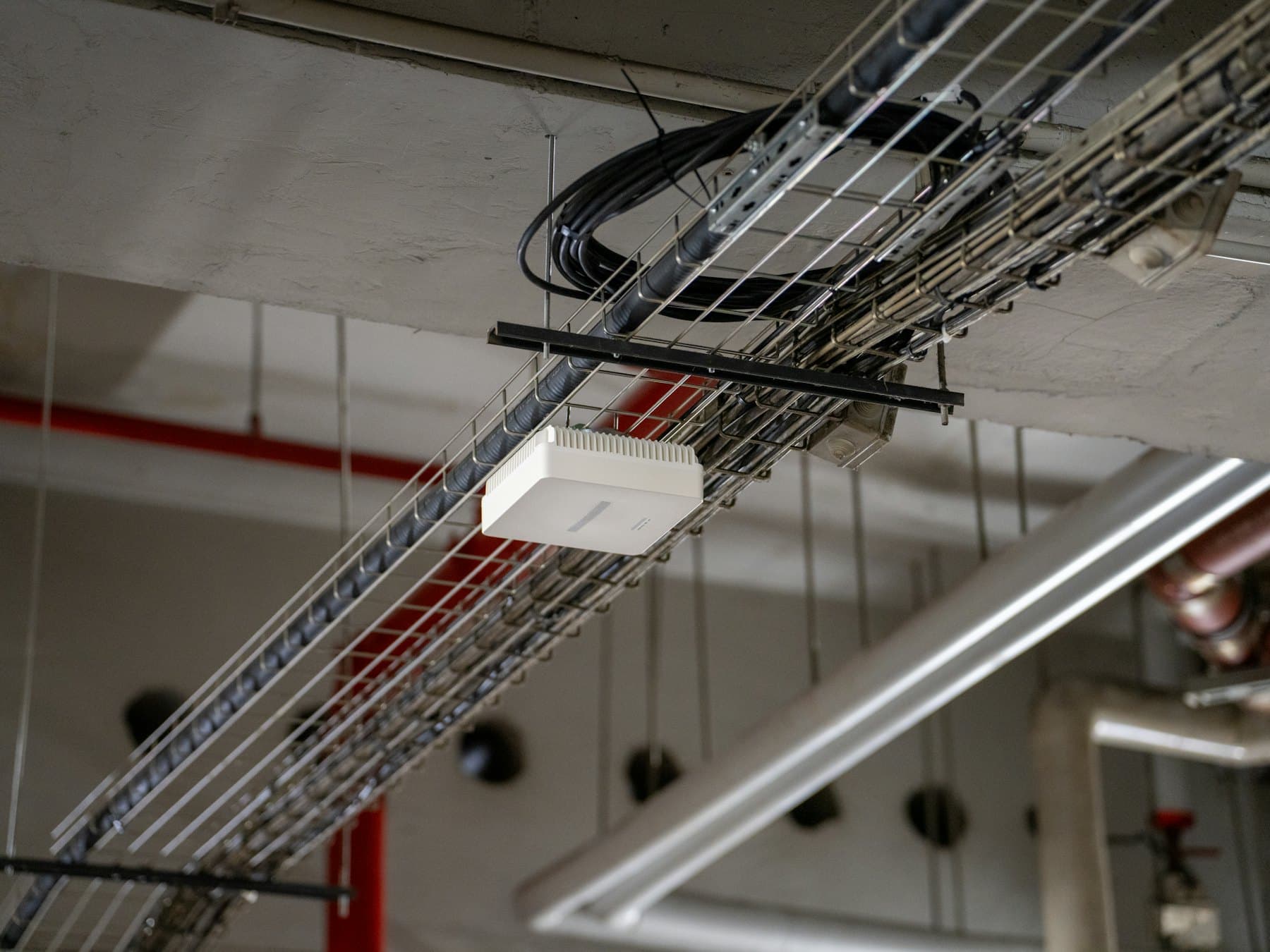
Every refresh cycle brings a new standard, and Wi-Fi 7 (802.11be) is arriving in enterprise access points from every major vendor. The headline numbers — 320 MHz channels, 4K-QAM, multi-link operation — are impressive, but most of the value in a real building comes from a handful of practical changes.
1. The 6 GHz band does the heavy lifting
Wi-Fi 7's biggest gains depend on 6 GHz, where wide channels are actually usable. That means your design has to start from 6 GHz coverage, not from 5 GHz with 6 GHz as a bonus. 6 GHz attenuates more through walls, so AP counts and placement deserve a fresh look rather than a like-for-like swap.
Check your country's regulatory status for 6 GHz first. Channel availability and power rules decide how much of Wi-Fi 7's promise you can use.
2. Wide channels are a capacity trade-off
A 320 MHz channel looks great on a speed test, but in a dense building it means fewer non-overlapping channels and more co-channel contention. In offices, hospitals and venues we still design mostly with 40 or 80 MHz channels and reserve wider channels for specific areas.
3. Multi-link operation helps reliability
Multi-link operation (MLO) lets a client use more than one band at once or switch instantly between them. In practice this improves latency and reliability for real-time applications more than it increases peak throughput — but only for clients that support it.
4. Your switching and power budget matter
- Multi-gigabit uplinks (2.5 / 5 / 10 Gb) for high-capacity APs
- PoE budgets for APs that may need 802.3bt power for full features
- Cabling quality — older Cat5e runs may limit multi-gig speeds
5. Clients decide the pace
Your network can only use Wi-Fi 7 features with Wi-Fi 7 clients. Inventory your devices — laptops, handsets, scanners, medical devices — and plan a phased migration that keeps legacy devices working while new ones benefit.
A good migration starts with a measured view of today's network, a predictive Wi-Fi 7 design and a clear plan for switching, power and clients. That is exactly what our consulting and design services deliver.